Shot size
From the extreme wide shot to the macro detail.
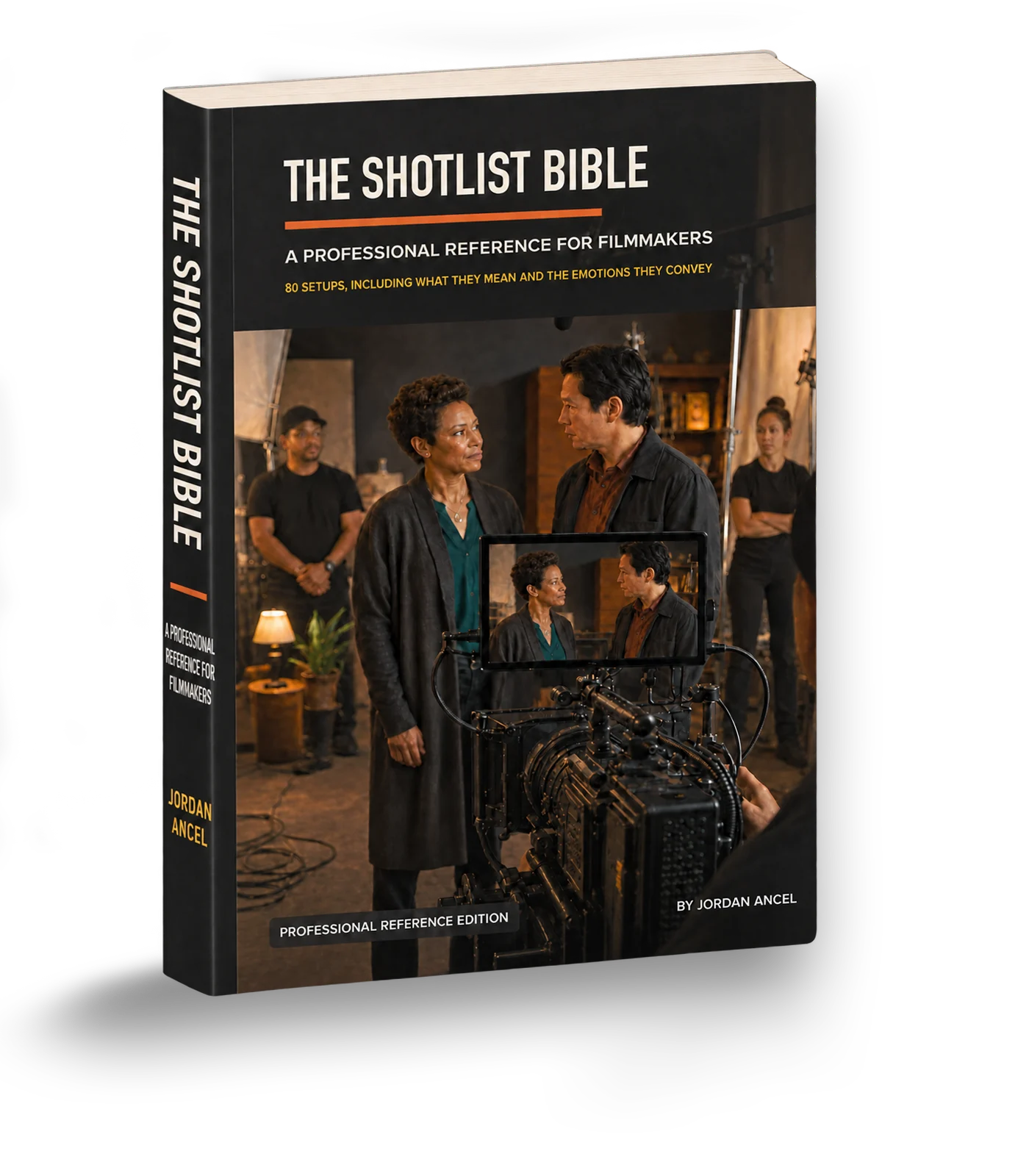
80 camera setups, each on one page: what the shot means, the emotion it creates, and exactly how to build it on set.
Normally $39. Instant PDF download · 109 pages
Look inside
Each of the 80 setups gets a full page you can read in a minute and use on set the same day.
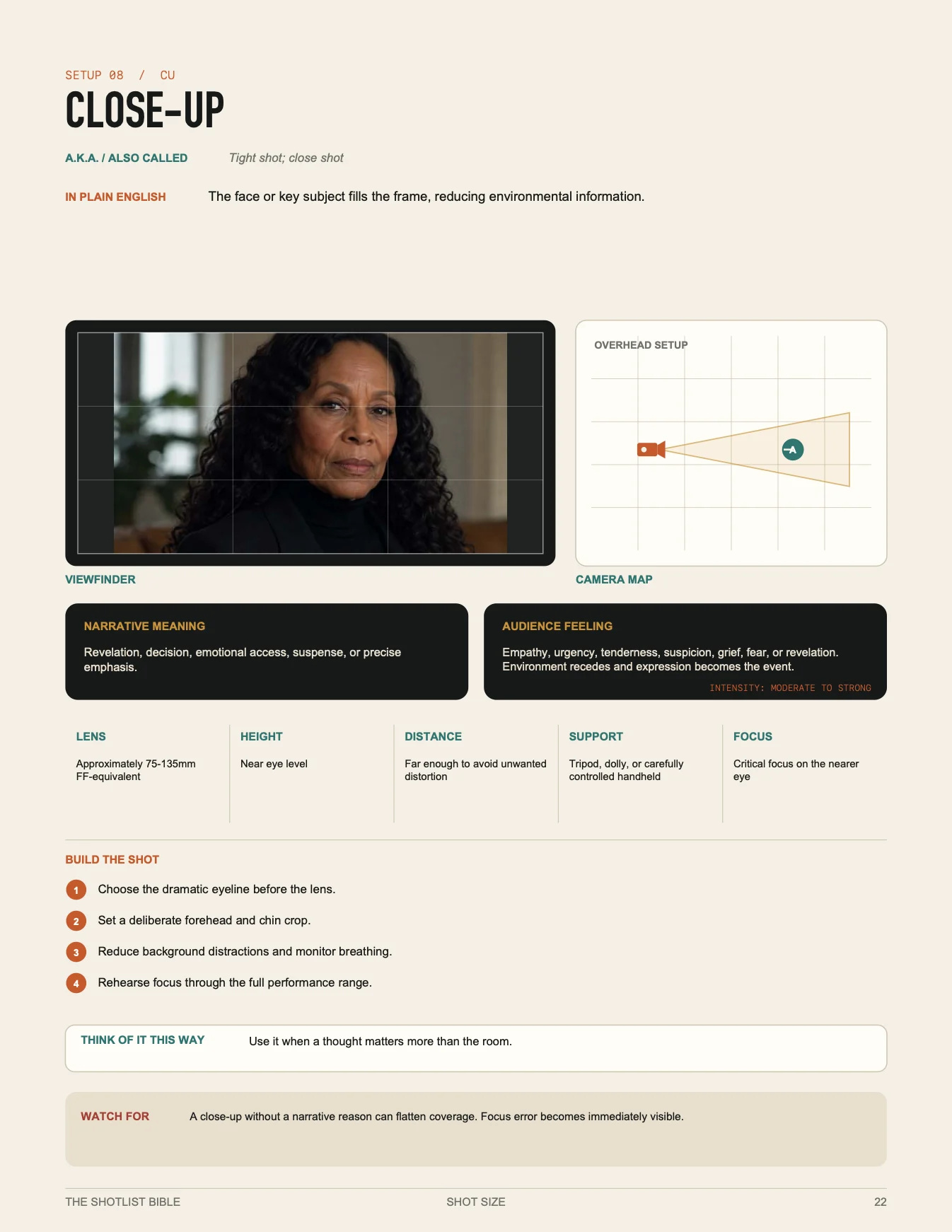
Setup 08 · Close-up
From the basics to the bold
Every setup comes with the names crews actually use and the feeling it pushes the audience toward, from tenderness to dread.
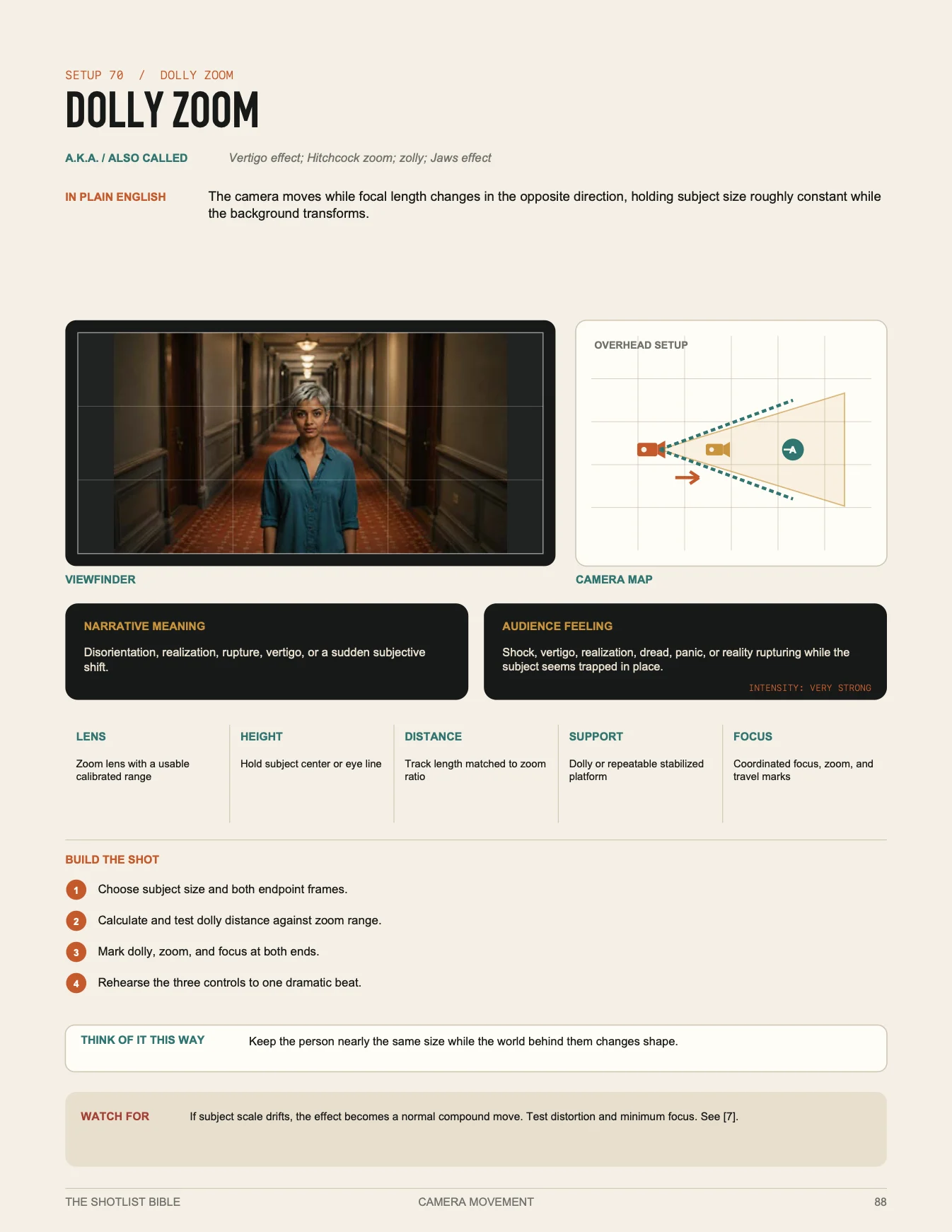
Setup 70 · Dolly zoom
What's inside
Plus a field method that works for every shot: lens and perspective, continuity across the line, and how a shot creates emotion.
From the extreme wide shot to the macro detail.
Masters, singles, two-shots, overs, POVs, reactions and the eyeline match.
Eye level, low, high, overhead, canted, aerial and every height in between.
Shallow and deep focus, rack focus, split diopter, tilt-shift and forced perspective.
Pans and tilts to cranes, dolly zooms, whip pans and the long take.
Name the beat, place the camera, choose the frame and the optic, then engineer the take.
How to use it
What changes for the viewer in this shot: information, emotion, geography, status or rhythm?
Height, side of the line, distance and movement, before you choose a lens.
Shot size, headroom, look room, foreground, background and the point of attention.
The focal length for that position. Check distortion, depth and close focus.
Marks, focus, movement, light, sound, safety, and your first and last frame.
It pushes the audience in a direction, and performance, light, sound and editing complete the feeling. This book shows you which way each setup pushes, so you choose it on purpose.
Directors, cinematographers, camera operators, photographers, producers, film students, content creators and anyone who tells stories with a camera.
No. It's written in plain English, every term is explained, and each setup starts with what it looks like and why you'd use it. Working crews use it as a quick reference.
A 109-page PDF (US Letter) that reads well on a tablet or laptop and prints cleanly.
Right after you pay, your download link is on the thank-you page and in your email. Links last 7 days, and you can get fresh ones any time at jordanancel.com/downloads.
Because it's an instant digital download, all sales are final.